Fine Print: Roy Lichtenstein. New York City, 1992
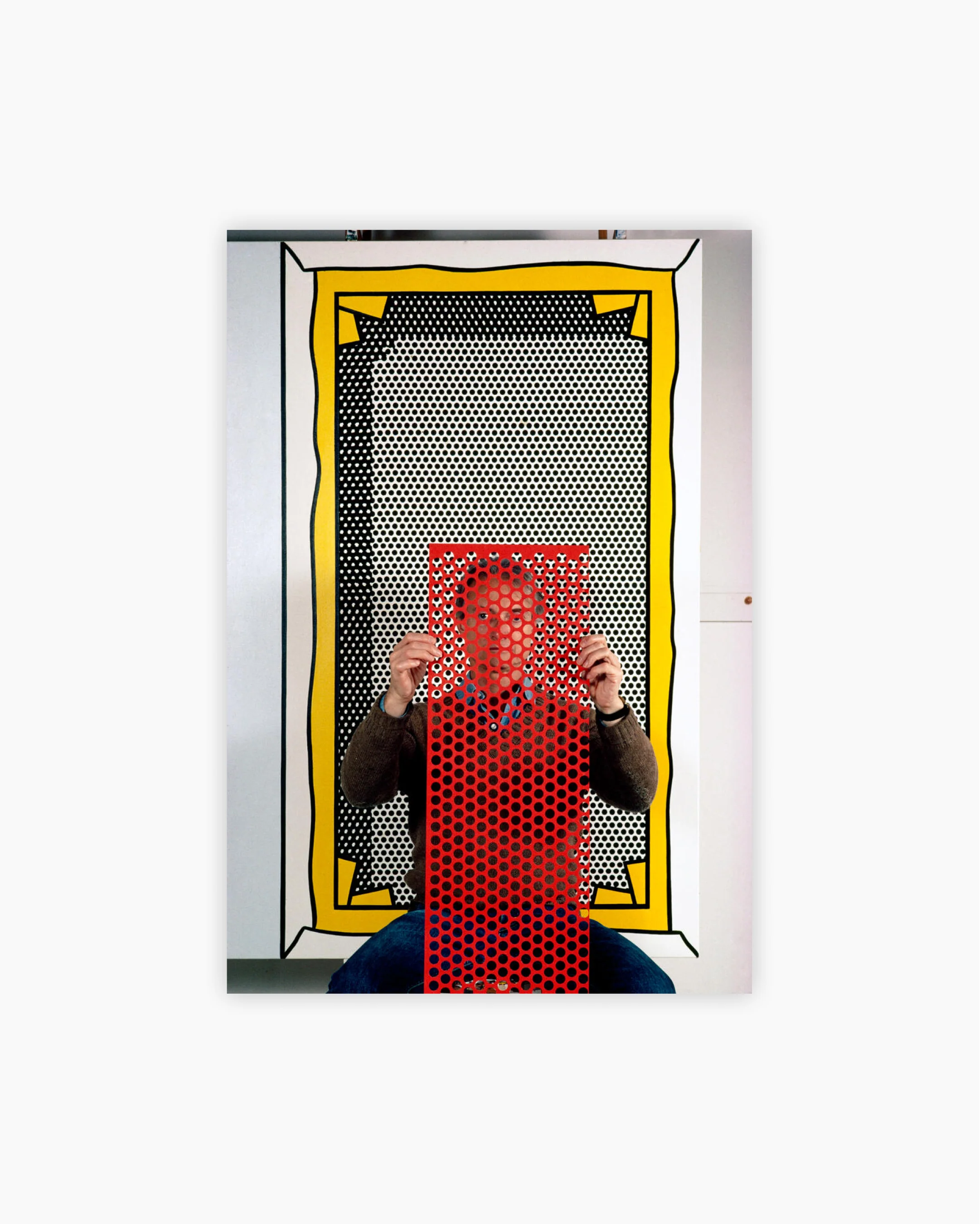
Hoepker made his first of many visits to Roy Lichtenstein’s studio in the early 1980s while working on a series about American pop artists and naturally, Lichtenstein was on his hit list. During one visit, Hoepker became intrigued by one picture in particular. “It showed nothing but the back of a yellow painted stretcher with the canvas stretched and dabbed with black and white grid dots – the picture of a picture, but only on the back,” says Hoepker. “I understood the grinning irony of this cool depiction. Lichtenstein had brought the idea of painting to the grid point, so to speak – the pure essence of pop art.” Hoepker found several rolls of red plastic foil with punched holes in a corner of the studio. “I understood that Roy used these stencils to apply his accurate raster structures on screens,” he says. “I asked him to sit down for a moment in front of his stretcher frame and look directly through the red foil in my lens. He agreed with a smile and gave away a small trade secret – the trick with which he painted his grid. I later named the photo “Double Pop”.
Product Information
Product Information
Shipping & Returns
Shipping & Returns
Fine Print: Roy Lichtenstein. New York City, 1992
Fine Print: Roy Lichtenstein. New York City, 1992
Hoepker made his first of many visits to Roy Lichtenstein’s studio in the early 1980s while working on a series about American pop artists and naturally, Lichtenstein was on his hit list. During one visit, Hoepker became intrigued by one picture in particular. “It showed nothing but the back of a yellow painted stretcher with the canvas stretched and dabbed with black and white grid dots – the picture of a picture, but only on the back,” says Hoepker. “I understood the grinning irony of this cool depiction. Lichtenstein had brought the idea of painting to the grid point, so to speak – the pure essence of pop art.” Hoepker found several rolls of red plastic foil with punched holes in a corner of the studio. “I understood that Roy used these stencils to apply his accurate raster structures on screens,” he says. “I asked him to sit down for a moment in front of his stretcher frame and look directly through the red foil in my lens. He agreed with a smile and gave away a small trade secret – the trick with which he painted his grid. I later named the photo “Double Pop”.
Original: $3,250.00
-65%$3,250.00
$1,137.50Product Information
Product Information
Shipping & Returns
Shipping & Returns
Description
Hoepker made his first of many visits to Roy Lichtenstein’s studio in the early 1980s while working on a series about American pop artists and naturally, Lichtenstein was on his hit list. During one visit, Hoepker became intrigued by one picture in particular. “It showed nothing but the back of a yellow painted stretcher with the canvas stretched and dabbed with black and white grid dots – the picture of a picture, but only on the back,” says Hoepker. “I understood the grinning irony of this cool depiction. Lichtenstein had brought the idea of painting to the grid point, so to speak – the pure essence of pop art.” Hoepker found several rolls of red plastic foil with punched holes in a corner of the studio. “I understood that Roy used these stencils to apply his accurate raster structures on screens,” he says. “I asked him to sit down for a moment in front of his stretcher frame and look directly through the red foil in my lens. He agreed with a smile and gave away a small trade secret – the trick with which he painted his grid. I later named the photo “Double Pop”.